

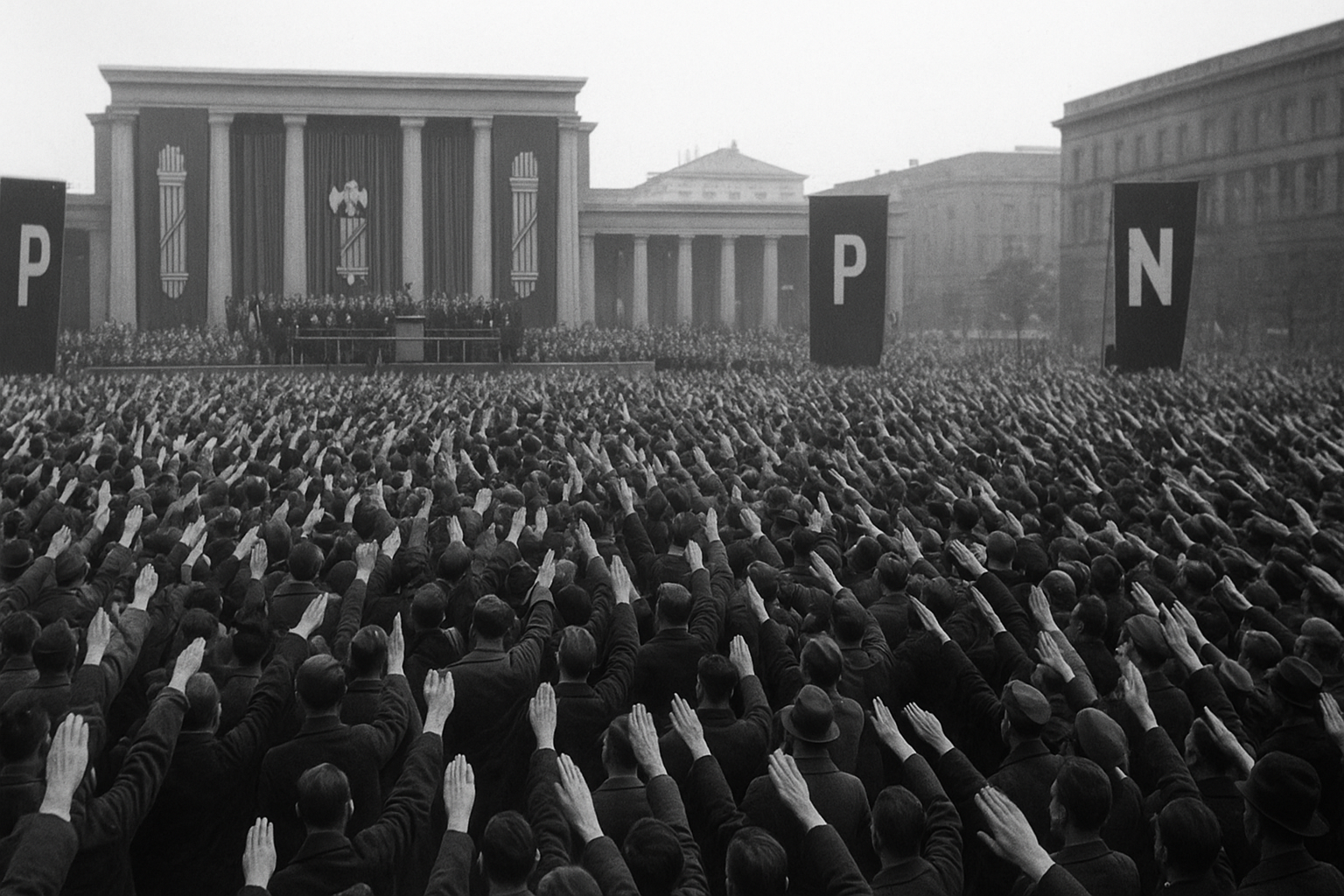
When we talk about Fascisterne—the Danish term for “the fascists”—we are exploring more than just a political movement from the past. We are looking at a crucial, dark chapter of modern history. Fascism is an ideology that promised national greatness but delivered dictatorship, war, and immense suffering.
Understanding Fascisterne is not an academic exercise; it is a necessary lesson in how freedom can be lost. This long guide will unpack the history, core beliefs, and lasting influence of these movements, ensuring we never forget the warning their legacy represents.
Table of Contents
1. Defining Fascisterne: More Than Just Dictatorship
The term Fascisterne refers to the political and social movements rooted in Fascism. This is an ultranationalist, authoritarian political philosophy that places the nation above all else.
1.1 The Meaning of Fascio
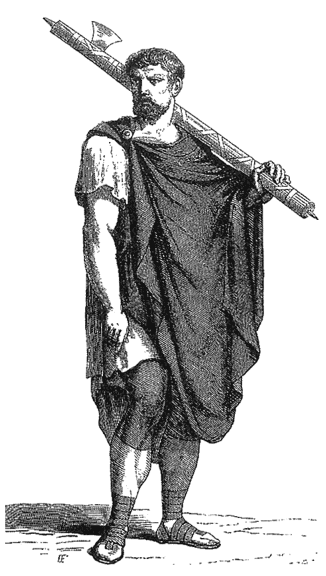
The name comes from the Italian word fascio, meaning “a bundle,” which relates to the Latin fasces—an ancient Roman symbol of authority (a bundle of rods tied around an axe). This symbol represented the unity and absolute power of the State over the individual. The message was clear: a single rod is weak, but a bundle is unbreakable.
1.2 Core Traits of Fascism
It is vital to distinguish between a simple authoritarian ruler and a truly fascist one. An authoritarian ruler may simply want people to be quiet, but Fascisterne actively seek to mobilize the entire population, forcing active participation in the movement.
Fascist regimes share these key traits:
- Ultra-Nationalism: The nation, often defined by a common race, culture, or history, is the highest priority.
- Totalitarianism: The State controls all aspects of public and private life, leaving no room for individual rights.
- Militarism: A glorification of war, violence, and the military as the highest national ideal.
- Anti-Democratic: A complete rejection of Liberal Democracy, voting, and pluralism.
- Cult of Personality: A single, charismatic leader (Duce or Führer) is worshipped as the infallible embodiment of the nation’s will.
2. The Explosive Origins of Fascist Ideology
The ideology of Fascisterne did not appear out of thin air. It was a direct consequence of the political, economic, and social chaos that followed the First World War (1914–1918).
2.1 Post-War Humiliation and Economic Despair
The Great War created a massive sense of disillusionment across Europe.
- Italy, despite being on the winning side, felt betrayed, leading to the term “mutilated victory” and widespread anger.
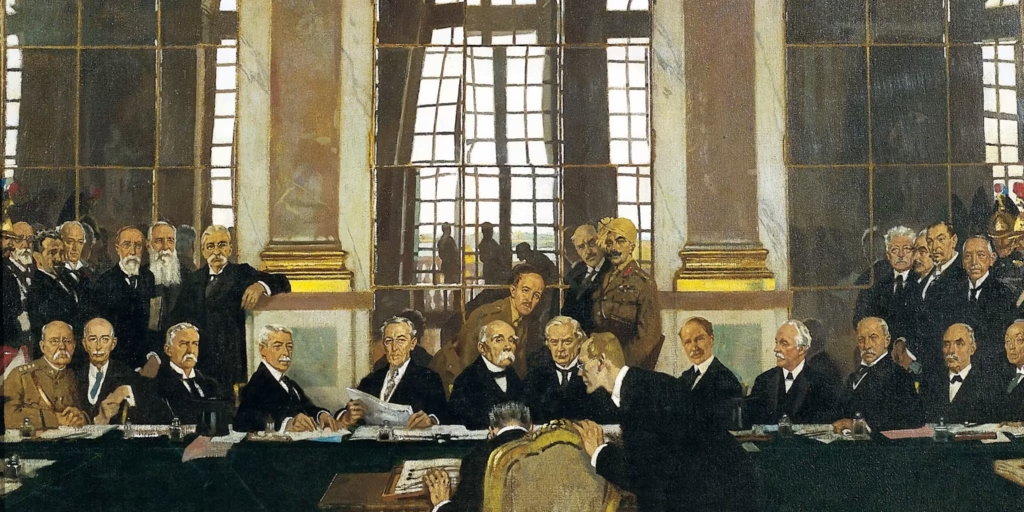
- Germany, the clear loser, faced the crippling financial burdens and national humiliation imposed by the Treaty of Versailles.
This environment of anger and betrayal was fertile ground for extremist ideas. Millions of demobilized soldiers returned home to economic turmoil, mass unemployment, and the feeling that weak democratic governments could not solve the nation’s problems.
2.2 The Reaction Against Communism and Liberalism
A crucial driving force behind the rise of Fascisterne was the deep fear of Communism, especially after the 1917 Bolshevik Revolution in Russia. Landowners, industrialists, and the middle class saw the threat of socialist and communist workers’ movements spreading across Europe.
Fascism was presented as a “Third Way” a hard-line solution that was neither capitalist nor communist. Fascist leaders argued they could preserve private property while uniting all classes under the strong, guiding hand of the State, promising to defeat the “Red Peril” through force and order. This anti-communism was a major point of unity for various Fascisterne movements.
3. The March to Power: Rise of Fascisterne in Europe
The 1920s and 1930s saw fascist movements take advantage of parliamentary fragility to seize power, often legally at first, before dismantling all democratic checks.
3.1 Case Study 1: Italy and Benito Mussolini (The Duce)
- The Birthplace: Italy was the birthplace of Fascism. Benito Mussolini, a former socialist editor turned ultra-nationalist, founded the Fascist Party in 1919.
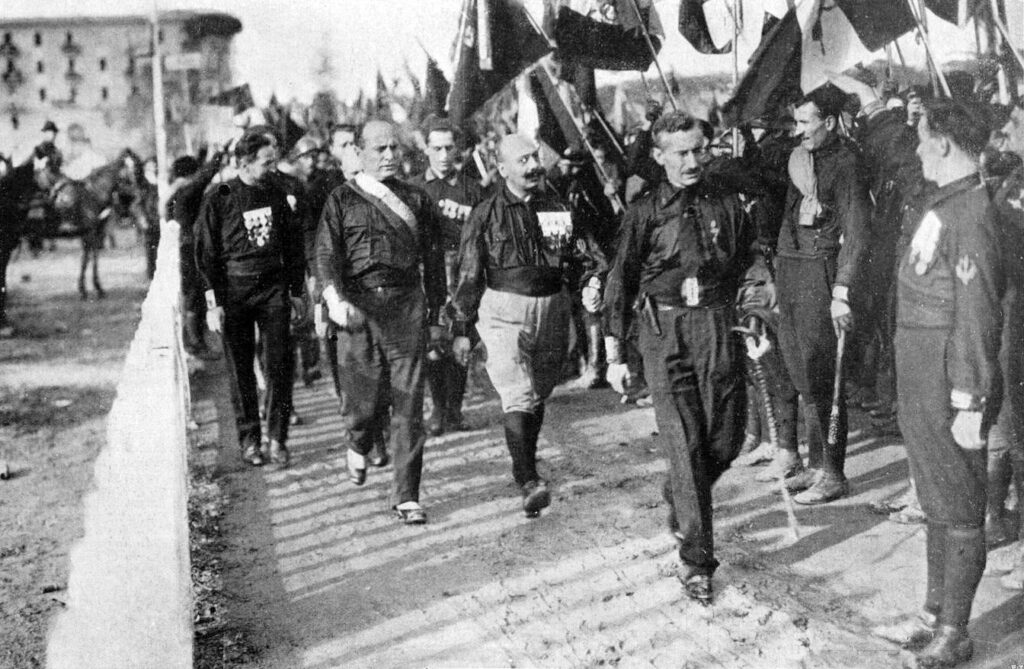
- The Threat of Force: In October 1922, Mussolini orchestrated the symbolic March on Rome. The threat of his armed Fascist squads (the Blackshirts), coupled with the King’s reluctance to use the military against him, led the King to appoint Mussolini as Prime Minister.
- The Consolidation: Over the next few years, Mussolini used a combination of intimidation, legislative changes, and relentless propaganda to slowly transform Italy into a one-party, Totalitarian State. He gave himself the title Il Duce (The Leader).
3.2 Case Study 2: Germany and Adolf Hitler (The Führer)
- The Catalyst: The Nazi Party, led by Adolf Hitler, gained significant traction during the Great Depression. They blamed Germany’s problems on the Treaty of Versailles and on internal enemies and Scapegoats (Communists and Jews).
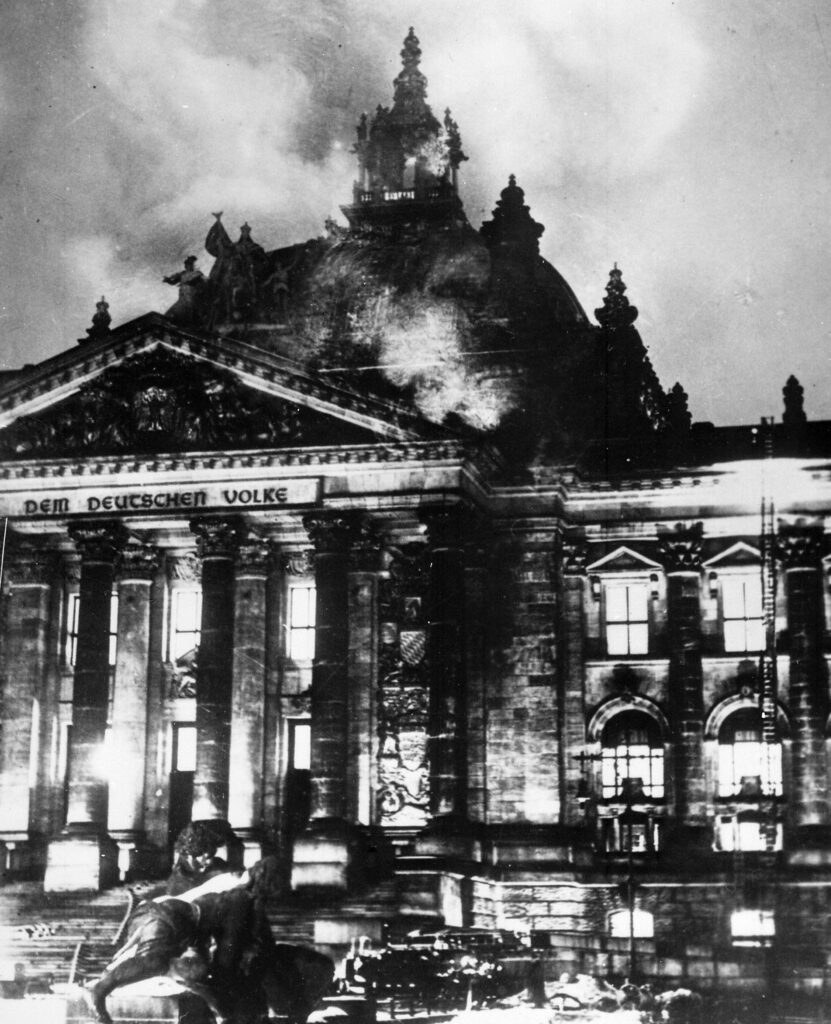
- The Legal Coup: Hitler was appointed Chancellor in January 1933. Like Mussolini, he exploited a political crisis the Reichstag fire to pass emergency decrees and, later, the Enabling Act in March 1933, which gave him dictatorial powers and dissolved the Weimar Republic.
- The Key Distinction: The German version of Fascisterne was National Socialism (Nazism), which was a distinct form rooted absolutely in Racial Ideology. The Nazi belief in Aryan superiority and virulent Anti-Semitism defined their movement and led directly to the Holocaust. This racial focus, absent in early Italian Fascism, is the crucial ideological difference. [Image illustrating the key differences between Italian Fascism and German Nazism]
4. Core Ideals: What Fascisterne Believed
Despite local variations, all major Fascisterne movements shared a unified ideological framework that aggressively rejected nearly every principle of individual liberty.
4.1 The Absolute State and Corporatism
The fundamental belief was simple: the individual is nothing, the State is everything. This was famously summarized by Mussolini’s slogan: “Everything in the State, nothing outside the State, nothing against the State.”
To manage the economy without resorting to Communism, Fascist Italy developed Corporatism. The state organized workers and employers into state-controlled groups (corporations) to eliminate class conflict and strikes. In reality, this system heavily favored big business and the state’s drive for Autarky (economic self-sufficiency), while workers’ rights and independent unions were crushed.
4.2 Militarism and the Cult of Personality
Fascisterne celebrated violence and conflict as a necessary, even noble, force. This Militarism manifested in massive spending on arms and the establishment of powerful paramilitary groups like the Blackshirts and the SA/SS.
Central to this was the Cult of Personality. The leader was not merely a politician but a spiritual guide, seen as the only person capable of interpreting the true will of the nation. Loyalty was not owed to institutions or laws, but to the Duce or the Führer alone.
4.3 The Role of Youth Indoctrination
For Fascisterne to establish their authority and create a perpetual system, they needed to capture the next generation.
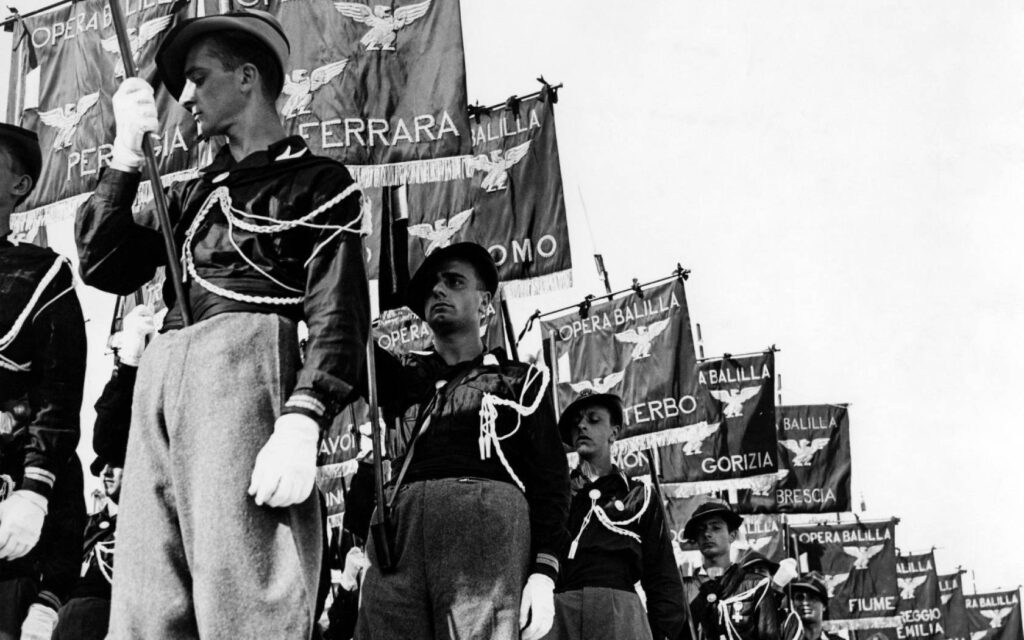
- Organizations like the Opera Nazionale Balilla in Italy and the Hitler Youth in Germany were mandatory, state-run systems for political and military training.
- Children were taken from an early age and taught that their highest purpose was to serve the leader and die for the nation.
- Education systems were completely rewritten to glorify the regime and erase inconvenient historical facts.
This aggressive Indoctrination created a profound, generational impact on the cultural and social fabric of these countries, demonstrating the practical, hands-on control exerted by a totalitarian system.
5. Fascisterne at War: The Axis Alliance
The aggressive ideology of Fascisterne made the Second World War (1939–1945) all but inevitable. The fascist powers Germany, Italy, and later Japan formed the Axis Powers, launching a massive military campaign driven by territorial expansion and ideological supremacy.
5.1 Aggression and Atrocity
The war was the ultimate expression of the fascist belief in purifying, expanding violence. It resulted in two catastrophic consequences:
- Imperialism and Lebensraum: Germany’s quest for Lebensraum (Living Space) in Eastern Europe and Italy’s pursuit of an African Empire led to brutal Aggressive Territorial Expansion.
- Genocide: In German-occupied territories, the state-sponsored persecution and systematic mass murder of six million Jews and millions of other perceived enemies defined the Holocaust—the most infamous chapter in the history of Fascisterne. This operation was carried out with chilling bureaucratic efficiency, fueled by the Nazi Racial Ideology.
5.2 The Collapse of the Regimes
The authority of the Fascisterne regimes rested entirely on their ability to deliver national victory and glory. When military defeat began in 1943, their power collapsed rapidly:
- 1943: Mussolini’s government was overthrown by his own Grand Council after the Allied invasion of Sicily, marking the start of the end for Italian Fascism.
- 1945: Hitler committed suicide, and Germany unconditionally surrendered in May, marking the definitive military defeat of the major fascist states.
The end of the war was followed by the Post-War Trials (most famously Nuremberg), which established international legal precedents for prosecuting crimes against humanity committed by the defeated leaders of Fascisterne.
6. The Lingering Shadow: Post-War Legacy and Modern Influence
The military defeat of 1945 did not erase the ideology of Fascisterne. Elements of its thinking survived, adapting to the new political landscape.
6.1 The Case of Franco’s Spain
The regime of General Francisco Franco in Spain, which won the bloody Spanish Civil War (1936–1939) with support from Hitler and Mussolini, maintained an authoritarian, conservative system until Franco’s death in 1975.
Franco’s rule demonstrated that a regime rooted in some fascist principles (ultra-nationalism, Anti-Communism, single-party rule) could survive the post-war cleanup by adopting a less aggressive foreign policy and integrating with powerful traditional institutions like the Catholic Church and the military.
6.2 The Birth of Neo-Fascism and the Far-Right
Immediately after the war, groups dedicated to the memory of the fallen regimes known as Neo-Fascist or Neo-Nazi groups emerged. While they are political fringe movements, they echo key themes of Fascisterne:
- Xenophobia: Hostility toward immigrants, minorities, and globalism.
- Conspiracy Theories: Blaming national problems on shadowy elites or specific minority groups.
- Nostalgia: A desire for a romanticized, “pure” national past.
In the modern context, these Extremist Organizations are often referred to as the Far-Right and use the anonymity of the internet to spread Propaganda, recruit followers, and organize, proving that the cautionary tale of Fascisterne is still relevant today.
7. Lessons from History: Why We Must Study Fascisterne
The history of Fascisterne is a powerful instructional manual for how democracies can fail. Ignoring this period is the surest way to risk repeating its mistakes.
7.1 The Dangers of Unchecked Power
The key lesson is the importance of Democratic Safeguards. Fascisterne did not always rely on military coups; they often used the legal framework of fragile democracies to gain a foothold before destroying the system from within. This highlights the need for a politically healthy society where:
- Checks and Balances are strong.
- Political Violence is immediately and uniformly rejected.
- The Rule of Law applies equally to everyone, regardless of political power.
7.2 How Propaganda Manipulates Truth
The fascist mastery of Propaganda and Media Control taught the world how easily truth can be manufactured. By controlling every newspaper, radio broadcast, film, and textbook, Fascisterne created an alternate reality where the leader was a savior and all opponents were traitors.
Simple takeaways for the modern reader:
- Be skeptical of media that only offers one viewpoint.
- Look for independent journalism and diverse sources of information.
- Reject politicians who label the press or political opponents as “enemies of the people.”
7.3 The Economic Appeal
Finally, studying Fascisterne teaches us that ideologies of hate and control thrive during times of Economic Despair and Social Instability. The promise of work, stability, and national pride, even if delivered through state control and militarization, was often more appealing than the chaotic reality of post-war democracy and depression. The most effective way to guard against extremism is to build a society with strong economic opportunities and a sense of shared purpose for all citizens.
8. Conclusion: The Lasting Warning of Fascisterne
The story of Fascisterne is the ultimate historical warning. It is the record of how a few charismatic leaders, appealing to national resentment and economic fear, can dismantle freedom in the name of order.
The ideologies that defined the darkest parts of the 20th century ultra-nationalism, racism, and the cult of the leader remain present in various forms across the globe. By continually studying the origins, the execution, and the victims of Fascisterne, we gain the clarity and resolve necessary to preserve the values of freedom, tolerance, and democracy.
The story of Fascisterne reminds us that history is not static. It is a living fabric woven with both triumphs and tragedies. Our duty is to cultivate a culture of memory, safeguarding the painful lessons of the 20th century. By honoring the sacrifices made for freedom and studying the cultural scars left by these regimes, we ensure that vigilance remains a cornerstone of modern life. If you want to read more about the powerful influence of history and culture, check out our dedicated category.